
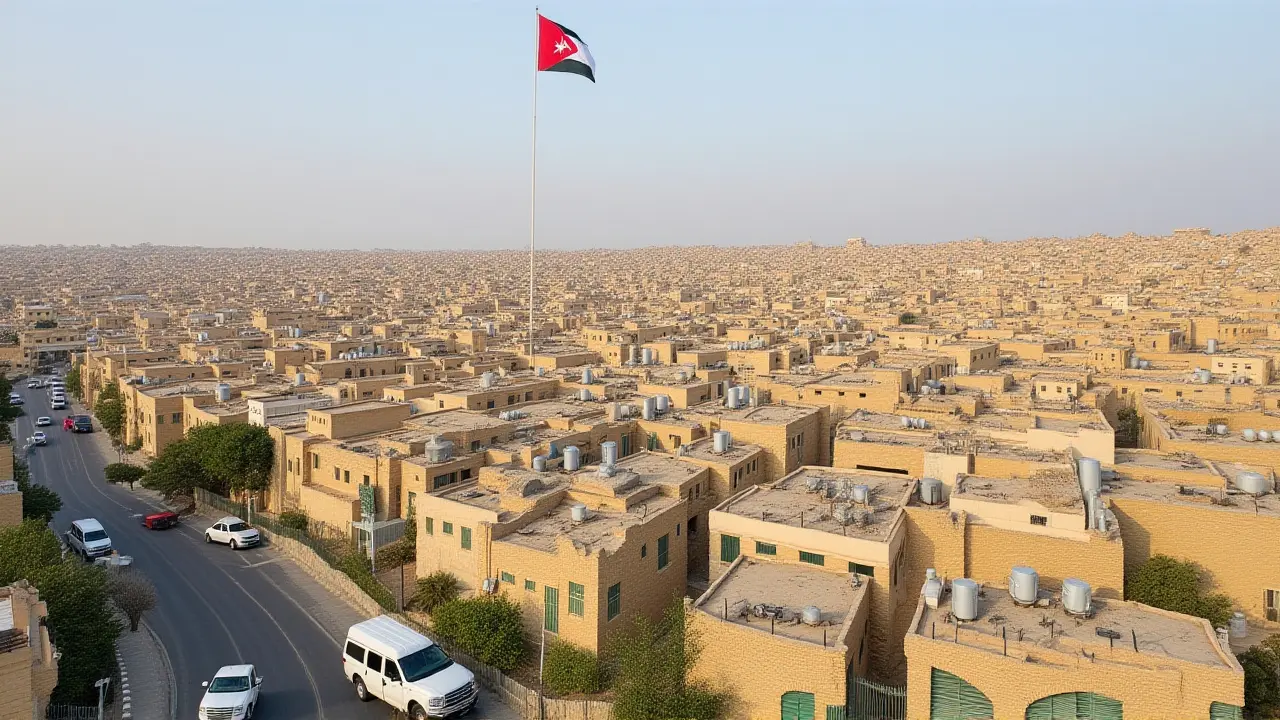
Just as families prepare to celebrate the end of Ramadan, a severe weather system is moving across the Kingdom. The Jordan Meteorological Department issued an urgent advisory late Wednesday night, March 18, 2026, warning of heavy rain, thunderstorms, and a significant temperature drop. This isn't just a standard spring shower; officials are flagging a high risk of flash flooding that could disrupt the upcoming Eid al-Fitr holiday period.
The timing couldn't be more critical. With the holiday just days away, travelers were already planning routes across the country. Now, they face a dramatic shift from unseasonably warm weather to a cold, wet front that meteorologists say will bring atmospheric instability. The alert was triggered by a low-pressure system moving into the region, bringing westerly winds expected to exceed 50 km/h.
A Cold Snap Arrives Just as Ramadan Ends
Here's the thing: the weather pattern is changing faster than usual. Starting Wednesday night, rainfall began spreading from the southern regions, including Aqaba, and moving northward toward Amman. By Thursday, March 19, the air mass was forecast to be relatively cold and humid. Temperatures were expected to plummet by 8-9°C below recent averages.
It's not just rain, either. The JMD warned of hail and dust-raising winds in the Badia regions, which can severely reduce visibility on the roads. In the higher elevations, specifically the Sharah Mountains, there was a chance of light snowfall mixed with rain during the early morning hours of Thursday. That's unusual for this time of year and adds another layer of danger for drivers navigating mountain passes.
The Dead Sea and Aqaba regions are particularly vulnerable to flash flooding in valleys and low-lying areas. Water levels in these zones can rise quickly, turning dry riverbeds into rushing torrents within minutes. Residents in these areas were told to stay away from culverts and desert tracks prone to sudden water surges.
Emergency Response and Road Safety Protocols
Government agencies moved quickly to prepare for the worst. The Jordan Ministry of Public Works and Housing announced the activation of medium-level emergency operations. This directive covered the period from Wednesday through Friday, ensuring that personnel and equipment were on standby across the Kingdom.
Public works directors in each governorate were authorized to escalate emergency levels to maximum depending on local conditions. They would coordinate directly with the ministry's central operations room. This kind of readiness is crucial because infrastructure damage from flash floods can cut off communities almost instantly.
Safety recommendations were specific and practical. Citizens were advised to wear heavy clothing for Eid morning prayers, as the cold air mass would persist into the holiday. There was also a strong warning about securing outdoor items on balconies or rooftops. With wind gusts potentially exceeding 50 km/h, loose objects could become dangerous projectiles. Driving safety was emphasized, with a reminder that wet roads combined with dust reduce traction significantly.
How the Weather Impacts Holiday Travel
The twist is that this weather front arrives while the regional conflict has entered its 20th day. Security alerts have already advised citizens to maintain essential supplies. Now, the added risk of flooding and road closures complicates Eid logistics even further.
Many Jordanians plan to travel to visit family during the three-day holiday. The forecast for Friday, March 20—the first day of Eid al-Fitr—indicated that winter-like conditions would intensify. Persistent showers were expected in the North and Central areas, as well as parts of the Eastern and South-western regions. While temperatures might rise slightly by Friday compared to Thursday, the risk of thunderstorms remained high, especially in the northern governorates.
Travelers need to be aware that roads could become impassable in low-lying areas. The JMD noted that rainfall was expected to gradually ease by Friday evening, with winds also subsiding. However, the window for safe travel is narrow. If you're planning a trip, checking real-time radar updates is essential before leaving home.
What to Watch For in the Coming Days
Looking ahead, the atmosphere should stabilize as the low-pressure system moves out. The key metric to watch is the temperature trend. A drop of nearly 10 degrees can affect everything from heating needs to crop conditions in agricultural zones. The Jordan Valley will remain relatively warm compared to the highlands, but the contrast creates unstable air currents that fuel thunderstorms.
Experts suggest keeping an eye on the official JMD updates throughout the weekend. If you are in a flood-prone area, have a plan for evacuation or sheltering in place. The emergency teams are ready, but prevention is always better than reaction when it comes to flash floods.
Frequently Asked Questions
When does the severe weather start in Jordan?
The weather alert began Wednesday night, March 18, 2026, with conditions intensifying through Thursday and Friday, March 20. The most critical period for flash flooding is expected during Thursday morning and Friday afternoon.
Which areas are most at risk for flash floods?
Valleys and low-lying areas are at the highest risk, particularly in the Dead Sea and Aqaba regions. Citizens should avoid driving through culverts or desert tracks that can fill with water rapidly.
Will there be snow in Jordan this week?
There is a chance of light snowfall mixed with rain over high southern mountain peaks, specifically in the Sharah Mountains. This is expected to be a short period during the early morning of Thursday, March 19.
What should I do to prepare my home for the storm?
Secure any loose outdoor items on balconies or rooftops to prevent them from being blown away by winds exceeding 50 km/h. Ensure you have heavy clothing ready for the significant temperature drop expected during Eid morning prayers.
Is the government providing emergency support?
Yes, the Jordan Ministry of Public Works and Housing has activated medium-level emergency operations. Public works directors can escalate to maximum emergency levels based on local conditions, with teams ready across the Kingdom.

Bryan Kam
March 27, 2026 AT 07:27Great timing for the rain. Just when everyone thought they could finally breathe, nature decides to remind us who's boss. Hope the roads hold up.
Cheri Gray
March 29, 2026 AT 07:10Its really sad to see the weather ruin eid plans but safety first. I hope everyone in jordan stays safe and warm during the prayers. The cold snap is going to be tough on the elderly people. We should all be sending good vibes to the community there. It is a beautiful tradition to celebrate together but nature is powerful.
Andrea Hierman
March 30, 2026 AT 04:40One must acknowledge the inherent unpredictability of meteorological phenomena during sacred observances. It is truly ironic that the divine celebration coincides with such terrestrial turmoil. I trust the authorities are managing the situation with the requisite level of competence. Perhaps the cold serves as a reminder of humility. We must remain vigilant and prepared for the unforeseen challenges that arise. It is unfortunate that joy is often tempered by external circumstances beyond our control. Nevertheless, we must proceed with caution and respect for the elements. The community will undoubtedly rally together to overcome this temporary adversity. I sincerely hope that no significant damage occurs to the infrastructure. It is crucial that we prioritize the safety of all individuals involved. One cannot help but feel a sense of concern for those traveling during this period. The situation is indeed quite precarious and warrants close monitoring. We should all extend our thoughts to those affected by the inclement weather. It is a testament to resilience that people continue to celebrate despite the odds. I remain optimistic that the conditions will improve by the end of the week.
Danny Johnson
March 30, 2026 AT 23:50I really hope everyone in Jordan is staying safe out there. It sounds like a tough time to be traveling but you guys are strong. Just remember to check the weather updates before you head out on your trip. Sending good vibes to all the families celebrating Eid this year. Stay warm and dry and take care of your loved ones. We are thinking of you during this storm.
Christine Dick
April 1, 2026 AT 12:25It is imperative that citizens adhere to the guidelines set forth by the authorities! One cannot simply ignore the warnings issued by the meteorological department! Negligence in such matters is unacceptable and potentially dangerous! We must all take responsibility for our own safety and the safety of others! The disregard for protocol is simply not an option! I expect everyone to follow the instructions without question! This is a matter of public safety and order! Do not be complacent about the risks involved! The community relies on individual discipline to function correctly! We must not allow emotion to cloud our judgment! It is vital that we maintain a sense of duty during this crisis! I trust that you will take this advice to heart! There is no room for error in these circumstances! Please ensure you are fully prepared for the worst! Safety must always be the primary concern for all involved!
Jullien Marie Plantinos
April 1, 2026 AT 22:03They always say the weather is bad but it is just a political move to keep people inside! They need to shut down the roads during the holiday! It is a way to control the population movement during sensitive times! I am not buying into the flood risk story at all! People need to drive and not let the government tell them what to do! It is ridiculous to cancel plans over some rain! We should be stronger and not let the weather dictate our lives! The media is exaggerating the danger for their own gain! Stop listening to the experts and use your own common sense! I am going to ignore the warnings and go out anyway! It is time to stand up for our freedom of movement! This is just another attempt to restrict our rights! Do not let them scare you with fake news! We need to be vigilant against these overreaching authorities! Stay strong and do not fall for their tricks!
Jason Davis
April 3, 2026 AT 15:54Yo that sounds kinda risky man. I think the govment is just tryna keep us safe. Flash floods are no joke and can be real nasty. Maybe just chill and wait it out instead of fighting it. The roads are slick and you dont wanna crash your ride. Its better to be safe than sorry in my book. I hear the wind is gonna be crazy strong too. Just take it easy and dont rush into danger. Hope you stay out of trouble though. The weather is wild but we gotta respect it. Maybe check the news before you head out. Stay cool and keep it safe.
Crystal Zárifa
April 4, 2026 AT 02:35Oh look, another surprise party from the universe. Nothing says Eid celebration like a little flood risk. At least the snow in the mountains sounds pretty cool. I guess we just adapt and find a new way to celebrate. It is all part of the grand scheme of things. Hope everyone stays dry and warm.
Serena May
April 4, 2026 AT 04:22Climate change is real and you are ignoring the data. 😠
Cheryl Jonah
April 4, 2026 AT 17:13I bet the weather data is faked to justify budget cuts. They want to keep people indoors so they watch the news. The low pressure system is just a cover story. It always happens during the holidays for a reason. I know the government is hiding something big. The real reason is to disrupt the celebrations. Do not trust the official reports they give you. It is all part of a larger plan to control us. Wake up and see what is really going on. The weather is a tool for social engineering. They want to keep us scared and dependent. I am not going to let them win this time. Stay alert and question everything you hear. The truth is coming out soon enough. Do not let them fool you with their lies.
James Otundo
April 6, 2026 AT 11:33You are wasting your time with these conspiracy theories. Real people understand the science behind the weather. Your paranoia is exhausting to read honestly. I prefer to focus on actual solutions rather than fear. It is pathetic how you cling to these ideas. The elite know what is happening and you do not. You are just spreading misinformation to the masses. I have better things to do than argue with you. Your lack of knowledge is quite apparent here. Stop projecting your insecurities onto the situation. It is really annoying to see this kind of nonsense. You need to educate yourself before posting. I am done listening to your ramblings now. Good luck with your delusions though. This is the last time I respond to you.
Sarah Day
April 7, 2026 AT 03:54Just hope everyone stays safe during the storm. It is really scary when the weather gets bad like this. I am glad the government is preparing for it. Let us all hope for the best outcome. Take care of yourselves out there. Sending love to everyone in Jordan.