
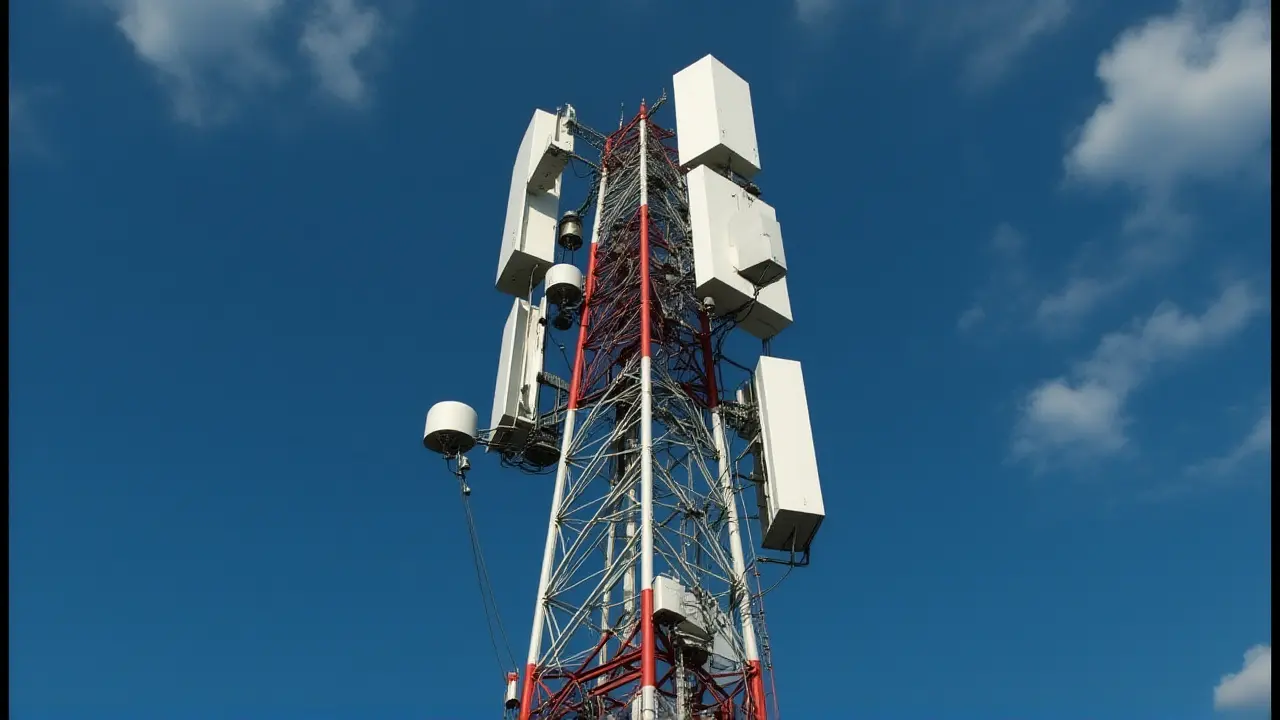
Major movement in South Africa's renewable energy sector got a serious boost yesterday when Standard Bank Group and NOA Trading announced financial close on the 349MW Khauta South Solar PV project. Located near Welkom in the Free State province, this flagship development introduces a pioneering financial structure designed to unlock capital for the country's broader energy transition. Turns out, this deal isn't just about building panels—it's about how we pay for them.
The Financial Twist Behind the Deal
Karel Cornelissen, CEO of NOA called it an evolution in financing renewable energy at scale. The core innovation here is a market-forming Payment Guarantee Facility structured by Standard Bank. Normally, developers tie up massive amounts of equity capital as credit support. Here's the thing: this guarantee frees up that equity instead.
By unlocking the capital through this facility, NOA can accelerate development on other projects while still holding down commitments under Generator Power Purchase Agreements (GPPAs). "This is more than just a project milestone," Cornelissen noted during the announcement. It allows them to deploy equity more efficiently. That liquidity across the development pipeline is crucial right now. It strengthens their position as a credible aggregator when dealing with commercial and industrial off-takers who need power reliably.
Project Specs and Timeline Details
Khauta South will be the largest single-asset solar PV facility in South Africa once constructed. But wait—it's actually part of a larger 506MW complex. The full site consists of two components: Khauta West with 157MW capacity and Khauta South with 349MW. Combined, they churn out 1,073 GWh of clean energy per year.
The timeline is aggressive but realistic. Early works construction began in early 2025. Energy production for Khauta South is anticipated to commence from early 2027. NOA acquired the project in April 2024 from Pure New Energy (PNE). The company currently sits on over 740MW of grid-secured projects and is on track to add significant generation capacity to the national grid from 2026 onwards.
Standard Bank's Role and Regional Reach
Standard Bank Group is the biggest piece of this puzzle on the finance side. As of December 31, 2024, they had 20 million clients and employed over 50,000 people across the African continent. They operate in 20 African countries plus four global financial centers. Recently, the bank won prestigious recognition at the Global Banking & Markets Awards: AfricaAfrica, taking home titles for Investment Bank of the Year and Global Markets House of the Year.
Brian Marshall, Head of Investment Banking at Standard Bank, commented on that recognition. He said it affirms their purpose-driven Africa-led growth strategy. More importantly, it reflects client trust in delivering game-changing outcomes. That trust is exactly what allowed this specific deal to move forward with such speed.

Broader Impact on South Africa's Grid
This transaction reflects a broader shift in the private sector energy market. Traders like NOA are aggregating demand and matching it with scaling renewable generation. It enables broad access to clean energy for businesses tired of load shedding. NOA is backed by African Infrastructure Investment Managers (AIIM), which is part of Old Mutual. AIIM serves as one of Africa's leading infrastructure-focused private equity fund managers.
Cornelissen concluded that this represents a blueprint for future generation facilities. By combining innovative finance with a scalable development model, they are helping drive the energy transition. Crucially, it adds much-needed generation capacity to the national grid while delivering real economic and environmental value. The details on pricing remain unclear to the general public, but the structural efficiency is already being praised by industry watchers.
Frequently Asked Questions
How does the Payment Guarantee Facility benefit investors?
The facility acts as a financial catalyst that frees up equity capital normally locked in as credit support. Instead of tying funds away, NOA can deploy that equity more efficiently to accelerate additional renewable energy projects.
When will the Khauta South project start producing energy?
Energy production for Khauta South is anticipated to commence from early 2027. Early works construction on the site began in early 2025 following the acquisition from Pure New Energy in April 2024.
What is the total capacity of the Khauta complex?
The larger Khauta complex totals 506MW, consisting of Khauta West at 157MW and Khauta South at 349MW. Once operational, both projects will generate 1,073 GWh of clean energy annually.
Who backs NOA Trading financially?
NOA is backed by African Infrastructure Investment Managers (AIIM), which is part of Old Mutual. AIIM serves as one of Africa's leading infrastructure-focused private equity fund managers.

James Otundo
March 27, 2026 AT 18:43It is incredibly frustrating that everyone celebrates the financing without understanding the underlying leverage ratios being pushed here. People always want to believe that the banking sector is magically solving every problem they face. This is just another way for institutions to offload risk onto smaller stakeholders while keeping the upside for themselves.
Sarah Day
March 28, 2026 AT 14:34I think you might be reading too much cynicism into a straightforward deal though. It actually looks like a solid step forward for the region if executed properly.
ryan pereyra
March 30, 2026 AT 12:11The liquidity engineering here is paramount considering current macroeconomic headwinds affecting GPPA valuations across the subcontinent. Standard Bank’s utilization of a Payment Guarantee Facility fundamentally alters the EBITDA profile for the developer which allows for accelerated asset monetization. Normally developers would be constrained by equity lock-ups that severely limit pipeline velocity in the renewable space. By decoupling credit support from balance sheet equity they effectively unlock the trapped capital for parallel development activities. This optimization is crucial given the capex intensity inherent in utility scale solar deployment strategies right now. Market participants need to recognize the shift from traditional project finance towards these structured credit enhancement mechanisms. The implication for secondary market trading of clean energy credits is also significant going forward.
Andrea Hierman
April 1, 2026 AT 01:05Your analysis suggests a level of complexity that is quite amusing given the simplicity of the press release issued yesterday. While the financial engineering is indeed intricate one wonders why such verbose descriptions are necessary for a standard transaction.
Danny Johnson
April 2, 2026 AT 14:18Really hope this helps bring more stability to the local grid because load shedding has been unbearable lately. It feels good to see some tangible progress happening instead of just promises from politicians.
Christine Dick
April 4, 2026 AT 07:07You express optimism which is naive! The private sector is primarily driven by profit margins and not public welfare!! If the returns are insufficient the project will stall despite your hopefulness!!!
Jullien Marie Plantinos
April 5, 2026 AT 20:37South Africa must prioritize its own energy sovereignty above external bank mandates!!!! These corporations are exploiting our resources for their quarterly reports!!!!!
Jason Davis
April 6, 2026 AT 04:26I get your point but lets not forget tht partnerships can actually speed up devlopment for us too. Its complex but maybe we shd look at the benifits first befoir jumping to conclusions.
Crystal Zárifa
April 7, 2026 AT 03:14Finally some movement.
Serena May
April 8, 2026 AT 13:48Hype 🙄. Real impact takes years 😴. Numbers look inflated 📉.
Cheryl Jonah
April 9, 2026 AT 19:13They say it is for clean energy but who really controls the switch when the sun stops shining on schedule. The timing of this announcement aligns perfectly with certain global shifts in funding policies. It feels too convenient for the usual suspects to be managing this specific corridor of assets. Everyone knows the grid infrastructure was never meant to handle this much intermittent load efficiently without subsidies. The narrative pushes green but the backend deals are shrouded in typical opacity regarding true costs. Local communities rarely get consulted on the land usage rights involved in these massive sites. Big banks love these stories because they sell well in annual reports regardless of on ground reality. The real story is who benefits when the warranty periods expire ten years down the line.
Jane Roams Free
April 11, 2026 AT 10:04Its important to stay grounded and recognize the good efforts made so far while remaining open to questions. Trust is hard earned but worth working for in infrastructure projects.
Anthony Watkins
April 13, 2026 AT 07:15Love seeing growth! 👍 American standards of banking should set the tone globally anyway 🇺🇸. These guys know how to maximize value 💰.
Bryan Kam
April 13, 2026 AT 09:04Priorities are interesting to watch. Local stability comes before export standards surely?
Cheri Gray
April 15, 2026 AT 03:22Is this reallly going to help with the blackouts people fear. The capacity numbers seem high but hopefull. Wishing luck for the constructuion team.
Boobalan Govindaraj
April 15, 2026 AT 22:22No worries its just early stage but great to see such big numbers for clean power. Hope the delays wont happen this time around. Keep pushing forward
mohit saxena
April 15, 2026 AT 22:24From a technical angle 349MW is substantial but the integration challenges with the grid remain significant. Storage solutions need to accompany PV expansion to ensure baseline reliability.
Sandeep YADUVANSHI
April 17, 2026 AT 16:53Grid integration is basic knowledge anyone with an engineering background knows storage isn't optional anymore. Basic competency is expected in these discussions.
Vikram S
April 18, 2026 AT 02:15It is absolutely staggering how often the media misrepresents these financial instruments. We see a guarantee facility and immediately assume simple debt structures when the reality is far more nuanced. Standard Bank has positioned themselves aggressively within the African infrastructure market for decades now. The equity release mechanism described here is genuinely sophisticated beyond basic project finance. Most observers fail to grasp the implications for broader capital allocation efficiency in the sector. This deal sets a precedent that others will scramble to emulate in the coming fiscal quarters. One cannot ignore the strategic alignment between NOA Trading and Old Mutual interests here. The Generator Power Purchase Agreements remain a critical risk factor for any potential investor involved. Load shedding mitigation is a worthy cause yet we must evaluate the economic viability first. South Africa deserves reliable energy solutions but not through subsidized distortions of free markets. The timeline extending into 2027 suggests patience is required from stakeholders involved. Private equity involvement usually signals high confidence but also high exit expectations. We need transparency regarding the actual pricing models utilized by off-takers. Regulatory frameworks in the Free State province must remain stable throughout construction phases. Without stability this massive investment could stall before meaningful output occurs. Ultimately the structural efficiency praised by watchers remains theoretical until production begins!